
Home » Impressing – entertainment and lifestyle
The semiotics of fashion: identity and subcultures in South Africa
21/09/2010 # 8:40 am # Impressing – entertainment and lifestyle # No Comment
Lethabo Dibetso
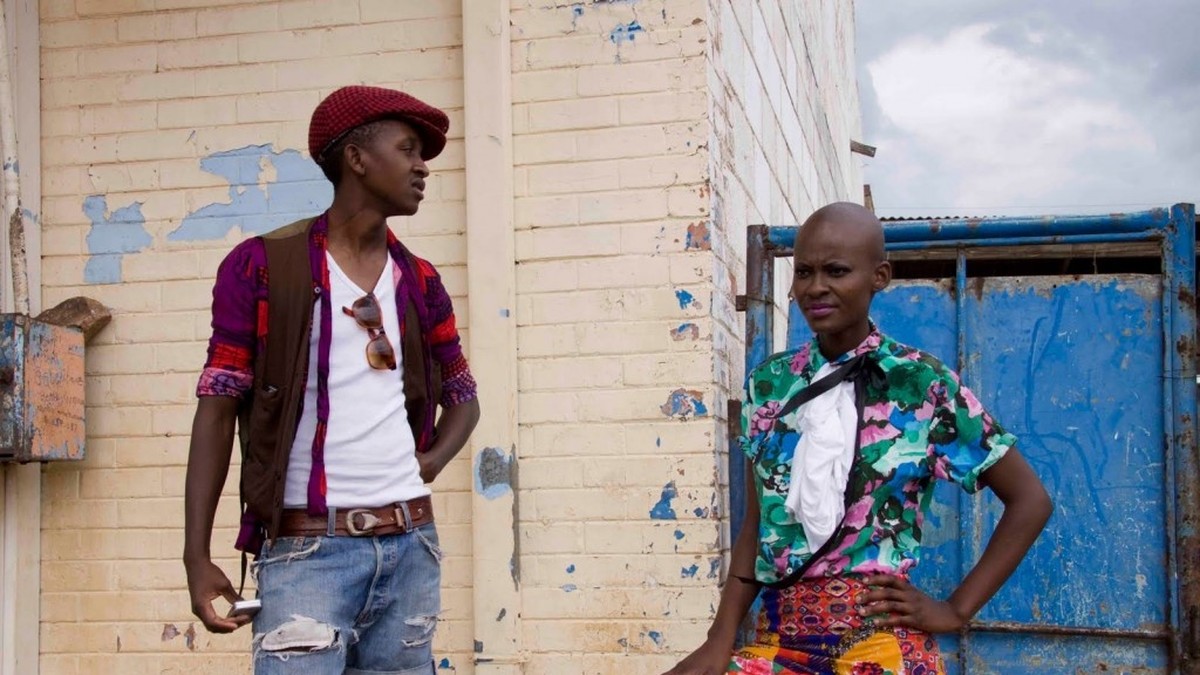
If you were to define identity, would it be your sense of style, the people you hang out with, the way you talk or more? What do you think….? Drawing upon his current research on Ama Kip Kip and Smarteez, Lethabo Dibetso offers an analysis.
The cultural settings in which we are born and come to maturity influence our behaviour but that does not mean that humans are robbed of individuality or free will (Giddens; 2001: 29). The latter two concepts are central to my research on the Smarteez and Ama Kip Kip ‘fanatics’. Style is a powerful statement of self-identity/individuality. According to Widdicombe and Wooftitt (1995: 17), style enables the young working-class person to achieve an image that they cannot achieve in reality.
Through style, individuals are able to live outside, what Giddens (2000: 30) calls, our ‘traditional signposts’. This refers to spaces that confine individuals from creating and recreating their identities. Brake (1985: 11) notes in his book that the symbolic use of style allows subcultural groups to distinguish themselves from other spaces and other groups. He states that through style several indicators are raised. It expresses a degree of commitment to the subculture, and it indicates membership of a specific subculture which by its very appearance disregards or attacks dominant values). Subcultural styles, then, can be seen as symbolic resources in the young person’s resistances against for example societal inequalities. Widdicombe and Wooffitt (1995: 17) give an example of the ‘teddy boys’ appropriation of an upper-class style, in the form of Edwardian dress coats, they ‘covered the gap’ between the implicated lifestyle and their largely manual, unskilled, low-status real careers and life chances.
For the Smarteez, nerdy sunglasses and unconventional hairstyles are signature, hereby subverting all conventional notions of what constitutes appropriate dress. Style is usually a principal defining feature of youthful subcultures (Brake 1985: 12). It is crucial to note, however, that it is not the specific clothes and possessions of objects in themselves that make style. Instead, it is through the process of stylisation that style is conceived. The concept stylisation refers to “the active organisation of objects with activities and outlooks, which produce an organised group-identity in the form and shape of coherent and distinctive way of being-in –the-world” (Widdicombe and Wooftitt 1995: 17). In her work, Sarah Nuttall (2003: 234-240) explores the notion of ‘self-stylisation’ in the context of Y culture in Rosebank, Johannesburg, increasingly also known as ‘loxion kulcha’ (‘loxion’ being a rescripting of the word ‘location’). This term helps us analyse Y culture, even though the location as well as the class vectors of the latter are poles apart. Because Y culture is embraced by urban black youths – a post apartheid generation of black teenagers who have attended multiracial (model C) schools – as well as many who have been to exclusively township schools. The kinds of self-stylisation that Y culture gives rise to mark important shifts in the making of subjectivities in the public sphere.
Whereas until the early 1990s, the relationship between self and ‘community’ and the broader political and economic conditions tended to frame public conception of self, post-apartheid youth culture has increasingly revealed along with global youth culture a greater attention to, and articulation of, processes of self-fashioning as artful, aesthetic, and deeply embedded in practices of imagination and in the elaboration of ‘lifestyles’ (Nuttall 2003: 238). Dress is the starting point of an exploration of self in society (Musangi 2009: 49). People have always needed a sense of who they are and a place to ground that sense of their identity in one or more of those institutions or activities of their lives: the church, their families and increasingly in the twentieth century their leisure and consumption (Grossberg et al 2006: 220).
Brake (1985: 12-13) further draws parallels between the use of style and fashion in subcultures by considering certain forms of analysis in linguistic theory. As much as we can draw meaning from a semiotic analysis of language, we can also see that the subcultural use of fashion is a rhetorical usage of formalised styles. Semiotics is central to understanding the process of meaning making (Grossberg et al 2006: 143). Through semiotics, we can understand the semiotic worth of clothing, how the appropriation of fashion by individuals can translate into meanings and express a form of resistance. To uncover the dimensions of signs, we must first attempt to unravel the codes through which meaning is organised, ‘connotative codes’ are particularly important (Hebdige 1979: 14). This is what I will continue to unmask in my current research on the self-styling of Ama Kip Kip and Smarteez. Watch this space!